

Improve Your Stride: Myofascial Release for Runners Using the MOBO
You know the moment.
The long run is done, the watch is finally stopped, and for the first time in miles you’re just standing still. But instead of that expected wave of relief, your hips feel like they’ve tightened into place—like someone replaced your hip flexors with stiff cables that don’t want to move.
Walking back to the car turns into a stiff shuffle. Your stride feels shortened, your posture slightly locked, and that smooth, effortless rhythm you had mid-run suddenly feels far away.
This isn’t just “normal soreness.” That deep tightness at the front of the hip is doing more than making you uncomfortable. It’s quietly reducing stride length, altering mechanics, and forcing compensations that often show up later as knee irritation, low-back tightness, or that vague feeling that your form just isn’t as efficient as it should be.

This is where targeted myofascial release becomes a game changer—and where tools like the MOBO start to matter for runners who want more than just temporary relief.
Why Your Hip Flexors Tighten So Easily After Running
Your hip flexors—the psoas, iliacus, and rectus femoris—are doing repetitive, high-volume work every time you run. Every stride is essentially a cycle of:
- Hip flexion (knee driving forward)
- Brief stabilization
- Hip extension (pushing behind you)
Over thousands of steps in a single run, those muscles spend a huge amount of time in a shortened position. The body adapts to what it repeats most.
So instead of fully relaxing afterward, the tissue can stay “switched on,” maintaining a low-grade contraction even when you stop running. That’s what creates that locked-up feeling in the front of the hip.
When hip extension gets limited, your body doesn’t just accept it—it compensates.
You might see:
- Overarching in the lower back to “fake” stride length
- Subtle inward knee collapse under fatigue
- Shortened, choppy stride late in runs
- Reduced glute engagement
None of these feel dramatic in the moment, but over time they add up. Efficiency drops. Load shifts to joints that weren’t meant to carry it long-term.
Why Stretching Alone Often Doesn’t Fix It
Most runners default to stretching: couch stretch, quad stretch, maybe a quick hip flexor hold before driving home.
And while stretching has its place, it doesn’t always solve the real issue.
Here’s why:
Stretching primarily targets length.
But post-run tightness is often about tissue restriction and sensitivity, not just length.
If the fascia and muscle layers are “stuck” or guarding, the body resists change. You might feel temporary relief, but the tissue often snaps right back to its shortened resting tone.
That’s why myofascial release matters—it works on the quality of the tissue, not just the length of it.
Instead of passively pulling on a tight system, you’re applying controlled pressure to help it release from the inside out.
Introducing the MOBO: Precision Over Guesswork

This is where the MOBO system becomes more than just another recovery tool.
The MOBO is designed with a raised groove that allows more targeted pressure placement compared to traditional rollers or balls. Instead of broadly compressing everything in an area, it helps you focus on specific trigger points while reducing unnecessary strain on surrounding sensitive structures.
That distinction matters.
A foam roller is like pressing a whole wall.
MOBO-style myofascial work is like finding the exact loose brick.
For runners dealing with hip flexor tightness, that precision means you can:
- Apply controlled pressure to deep hip tissue
- Avoid compressing nerves or sensitive structures
- Adjust intensity simply by shifting body weight
- Work in small, precise layers instead of brute force
The goal isn’t to “smash” the muscle. It’s to give it a reason to let go.
Step-by-Step: Hip Flexor Release Using MOBO

1. Find the right starting position
Lie face down and place the MOBO under the front of your hip, slightly inside the bony point at the side of your pelvis.
Take your time here.
Slowly shift side to side until you find a spot that feels dense, tender, or “different” from surrounding tissue. That’s usually your entry point.
Think: specific discomfort, not generalized pressure.
2. Stack your body for control
Once you find the area, stabilize your position:
- Keep pelvis as level as possible
- Bend the opposite knee out slightly for balance
- Support your upper body on your forearms
This setup matters more than people realize. It keeps the pressure controlled instead of collapsing into the joint or overloading surrounding structures.
You’re not hanging on the tissue—you’re directing pressure into it.
3. Work in layers, not intensity
Start light.
Most runners make the mistake of going too hard too fast. But more pressure doesn’t equal better release.
Instead:
- Begin with partial body weight
- Breathe and let the tissue “meet” the pressure
- Gradually increase load only if the sensation stays local and dull
What you’re looking for is a deep, achy release—not sharp or radiating pain.
If it feels electric, numb, or shoots anywhere, adjust immediately.
4. Use breath as your release mechanism
This is the part people underestimate.
Once settled on a tight spot:
- Inhale slowly through the nose
- Expand into the belly
- Exhale and consciously soften the hip area
Think of each exhale as reducing resistance by 5–10%.
Stay here for 30–90 seconds, allowing the tissue to gradually “give.”
Then shift slightly and repeat on another restricted area.
What a Good Release Actually Feels Like
A productive release feels like:
- A dull, melting pressure
- Gradual softening under the tool
- Localized sensation (stays in one area)
- Slight increase in warmth or ease afterward
It should not feel like:
- Sharp pain
- Tingling or numbness
- Radiating sensation into thigh or groin
- Bruising-level intensity
Safety Rules That Actually Matter
This isn’t about being cautious for the sake of it—it’s about making sure the work actually helps your running instead of irritating tissue.
Stop immediately if:
- Pain travels away from the contact point
- You feel nerve-like sensations (tingling, burning, shooting)
- The pressure lands directly on bone
- Symptoms worsen after the session instead of improving
Avoid pressing into:
- The inner groin crease (important nerve and vessel pathways)
- The front hip bone (ASIS)
- Any sharp, unmoving structure
And if you’ve got persistent pain that doesn’t behave like typical tightness—clicking, deep joint discomfort, or night pain—that’s not something to “roll out.” That’s a sign to get assessed properly.
How This Changes Your Running (If You Actually Stick With It)
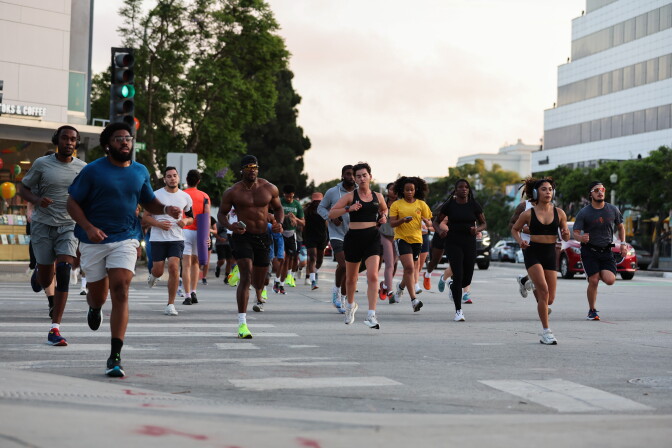
Here’s what most runners notice when they consistently integrate hip flexor release work:
- Easier stride extension at toe-off
- Less “grabbing” in the front of the hip after long runs
- More natural upright posture when fatigue sets in
- Reduced compensation in the lower back
- Smoother transitions into faster running sessions
The biggest change isn’t just comfort—it’s efficiency. You stop fighting your own tissue.
Even 10 minutes after key runs can shift how your body feels the next day.
How to Fit This Into Your Training Week
You don’t need to overcomplicate it.
Try this simple structure:
- After easy runs: 5–10 minutes release work
- After long runs: slightly longer focused session
- After speed sessions: light maintenance only
Rest days: optional, based on how you feel
Consistency matters more than intensity here. Think of it like maintenance, not correction.
Final Thought
Tight hip flexors after running aren’t just a side effect of effort—they’re often a signal that your tissue is adapting to repetitive load without enough recovery input in the right places.
Stretching helps. Strength work helps. But sometimes what’s missing is the ability to directly influence the tissue that’s holding the pattern in place.
That’s where targeted myofascial release comes in—and why tools like MOBO can be useful when you want precision instead of guesswork.
Because the goal isn’t just to recover from your runs.
It’s to keep your stride feeling like yours.