Why Myofascial Release Is Important for Soccer Players (and How MOBO Improves Mobility)

Soccer at every level—from youth development to the World Cup stage—isn’t just about skill, speed, or fitness. It’s about how well your body moves under pressure, how quickly it recovers, and how efficiently it handles fatigue across 90+ minutes.
One of the most overlooked performance factors in soccer is tissue quality and movement efficiency. This is where myofascial release and targeted mobility training come in. When combined with stability tools like the MOBO, they create a powerful system for improving performance and reducing injury risk.
What is Myofascial Release?
Myofascial release (MFR) is a recovery and mobility technique that targets the fascia—the connective tissue that surrounds and connects your muscles.
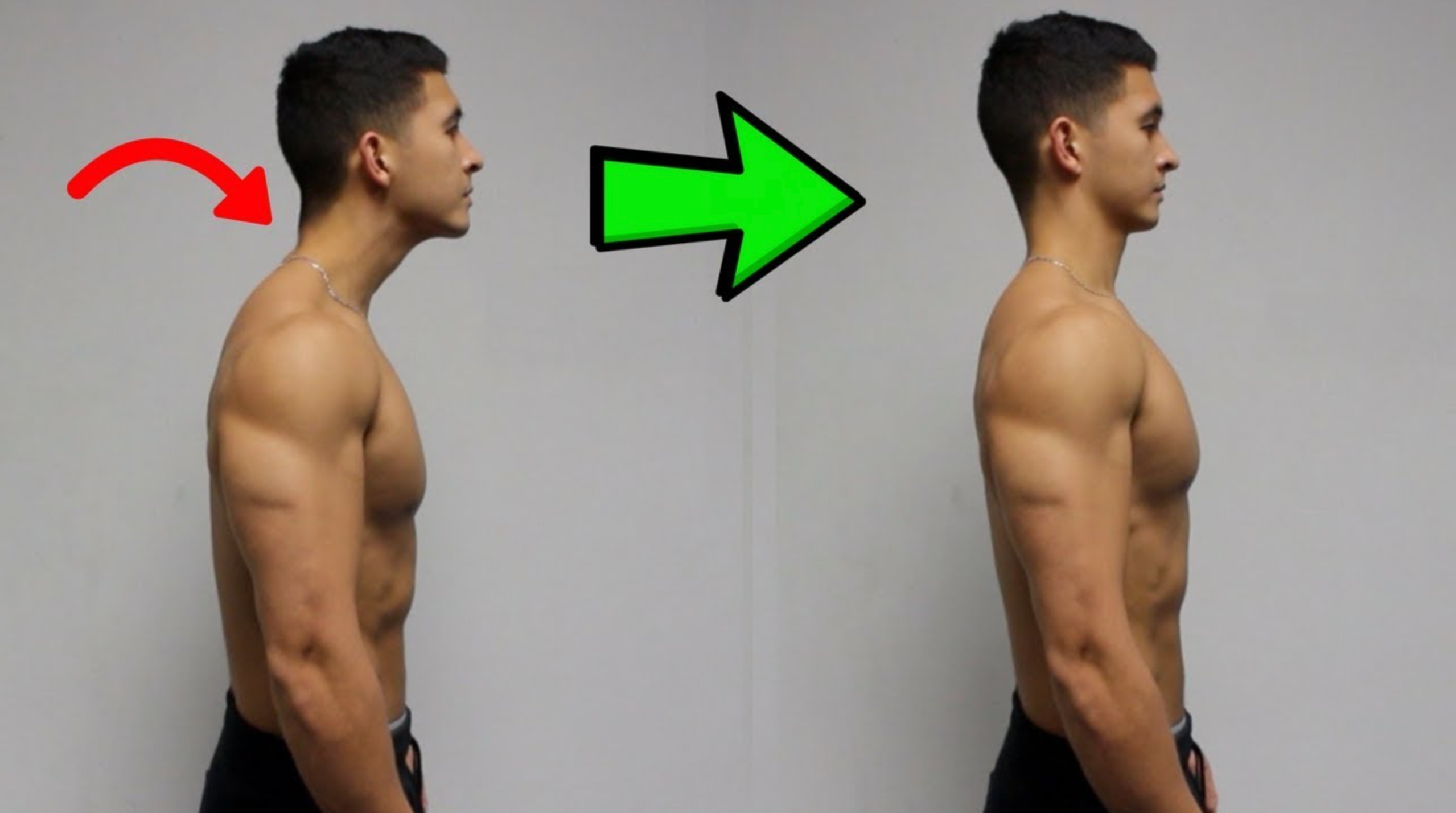
Think of fascia as a web that holds everything together. When it becomes tight or restricted, your movement becomes limited, stiff, and less efficient.
In soccer players, this often shows up as:
- Tight hips during sprinting
- Reduced stride length
- Slower direction changes
- Increased risk of hamstring or groin injuries
- Feeling “heavy-legged” even when cardio fitness is good
Myofascial release helps restore normal tissue movement and reduces these restrictions, allowing your body to move more freely.
Why Myofascial Release Matters in Soccer
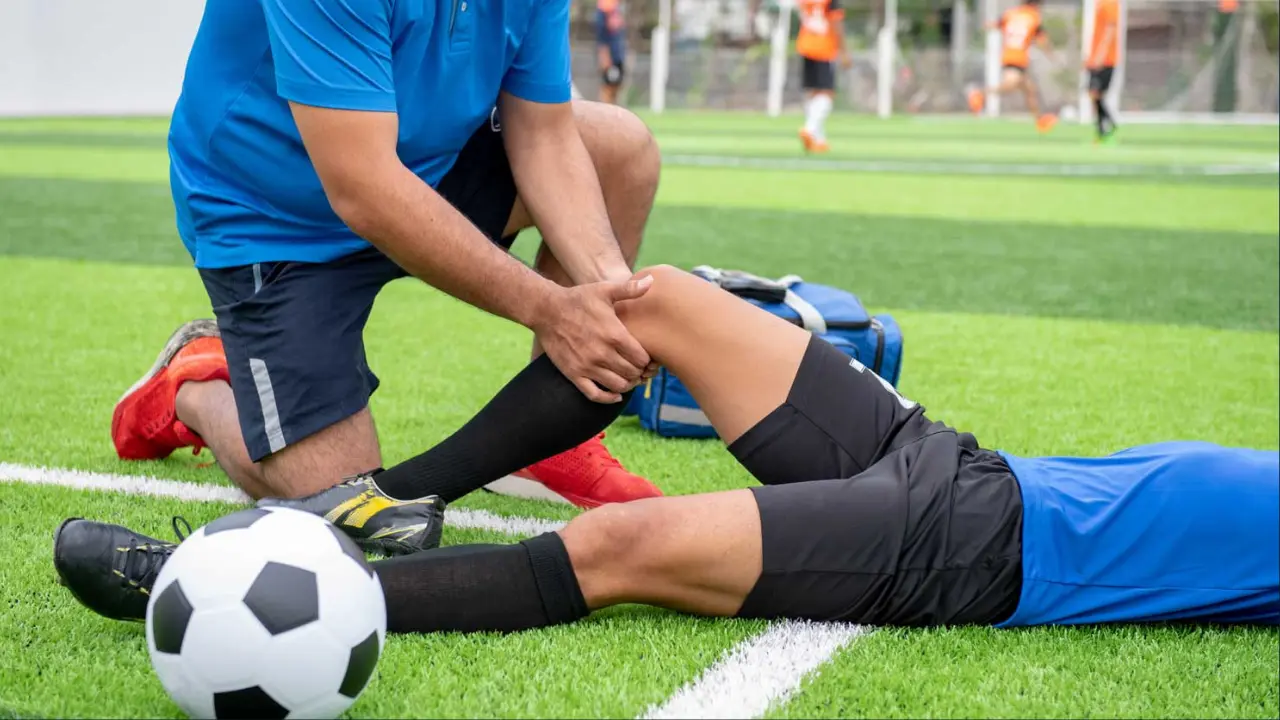
At elite levels of soccer, the difference between winning and losing can be milliseconds. A tight muscle or restricted joint can slow reaction time, reduce acceleration, and affect technical precision.
When fascia is restricted:
- Your nervous system works harder just to move
- Your muscles fatigue faster
- Your range of motion decreases
- Your injury risk increases under loadMyofascial release helps by improving blood flow, reducing muscle tension, and “resetting” the nervous system so your body can move more efficiently.
It’s not just recovery—it’s performance preparation.
Key Areas Soccer Players Should Target
1. Hip Flexors

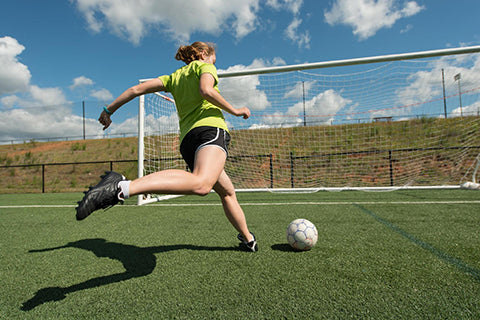
Hip flexors are heavily involved in sprinting and kicking mechanics. Tightness here limits stride length and reduces explosive speed.
This area becomes especially tight in soccer players due to long hours of sitting (travel, school, or rest days).
2. Hamstrings

Hamstrings are one of the most injury-prone muscle groups in soccer.
They absorb high loads during sprinting and deceleration. If they are tight or under-recovered, they are far more likely to strain—especially late in games when fatigue sets in.
3. Calves and Ankles

Calf and ankle mobility directly affect acceleration, agility, and balance.
If your calves are tight:
- You lose explosiveness
- Your first step slows down
- Your landing mechanics become less stable
Ankle mobility is essential for cutting, dribbling, and directional changes.
Where the MOBO Fits In

Myofascial release improves mobility—but mobility without control doesn’t translate to performance.
This is where the MOBO comes in. It’s designed to build stability, balance, and neuromuscular control, especially in single-leg positions that mimic soccer movements.
The MOBO helps improve:
- Ankle stability
- Knee control during movement
- Balance under pressure
- Proprioception (body awareness in space)In soccer terms, it trains you to stay stable while being unstable—just like in real game situations.
MOBO Training for Soccer Players
Here are three effective soccer-specific MOBO drills:
1. Single-Leg Balance Hold
Stand on one leg on the MOBO Board and hold a stable position for 30–45 seconds.
Focus on:
- Keeping hips level
- Controlling ankle wobble
- Staying relaxed but stable
This builds foundational balance and joint control.
2. Ball Control While Balancing
Stand on the MOBO Board while passing a ball against a wall or with a partner.
This adds coordination and upper-body movement while maintaining balance.
It simulates real match demands where you must control the ball while under physical stress.
3. Micro Squats
Perform small, controlled squats while standing on the MOBO Board.
Focus on slow, controlled movement and proper knee alignment.
This builds reactive strength for cutting, landing, and sprint transitions.
The Real Advantage: Mobility + Stability Together
Most players focus on either stretching or strengthening—but not both in a connected system.
Here’s the key difference:
Myofascial release gives you mobility (freedom of movement)
MOBO training gives you stability (control of movement)
If you only stretch, you may feel loose but unstable.
If you only train strength, you may be strong but restricted.
Together, they create:
- Better movement efficiency
- Lower injury risk
- Faster recovery
- Improved performance under fatigue
Simple Soccer Mobility Routine (15–20 Minutes)
You can use this before training or on recovery days:
Step 1: Myofascial Release (8–10 minutes)
- Calves (2 minutes)
- Hamstrings (2 minutes)
- Hip flexors (2 minutes)
- Glutes (2 minutes)
Step 2: Dynamic Mobility (5 minutes)
- Leg swings (front/back and side-to-side)
- Walking lunges
- Hip circles
Step 3: MOBO Stability Work (5–8 minutes)
- Single-leg balance hold (2 x 30 seconds each leg)
- Ball passes or controlled upper-body movement
- Micro squats (2 x 10 reps)
Why This Matters at the Highest Level
At the World Cup level, players are not just judged by talent—they are judged by consistency, durability, and efficiency over multiple high-intensity matches.
Poor mobility or stability often leads to:
- Late-game injuries
- Decreased performance under fatigue
- Slower recovery between matches
- Reduced technical sharpness
Modern elite training now combines:
- Myofascial release (recovery and tissue quality)
- Mobility drills (movement range)
- MOBO-style stability work (control and balance)
This combination is what keeps elite players performing at their peak when it matters most.
Final Thought
Soccer performance is built in the details most people ignore.
Myofascial release helps your body move freely and recover faster.
The MOBO trains your body to stay controlled in unpredictable, high-pressure situations.
When combined, they create a more complete athlete—one who moves better, reacts faster, and stays healthier across a long season.
At the highest level of soccer, that edge is everything you need.